
ProductsFamily
Large horizontal and multi-tonne chambers
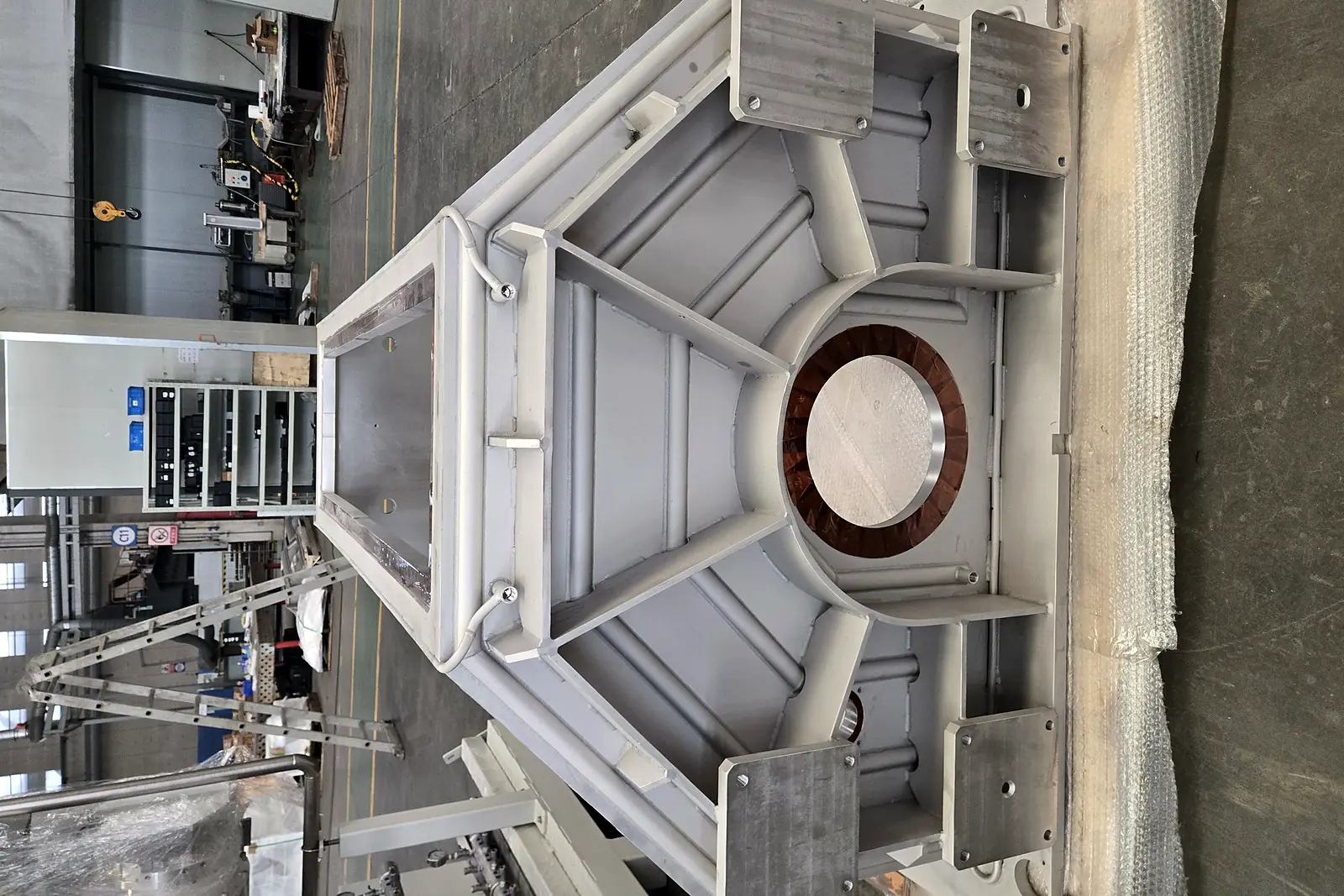
Chambers weighing several tonnes and metres long, assembled and turned as one piece under the crane.
A horizontal chamber is usually several tonnes and metres long; the hard part is not welding but lifting, turning, splitting and shipping. For these we settle lifting points, split positions and transport envelope at drawing review, before anything is cut.
How it is built
The shell or box is built in sections, each trued and centre-aligned before fit-up. After the joint is closed the whole assembly is turned under the 50 t crane to weld and inspect the other side. Internals, rails, supports and lifting lugs go in to drawing, with stress relief and re-straightening where needed after welding.
Interfaces and fits
Large chambers carry a lot of ports, viewports, doors and internal fixtures, and conflicts have to be caught at review rather than on the floor. Split positions, lifting points and transport saddles are drawn or agreed jointly so the chamber can still be lifted once it leaves the plant.
How it is verified
Helium tested as a whole, or per section with a re-test after final assembly; critical dimensions (straightness, flange-face positions, lifting-point spacing) recorded as agreed. Dispatch follows the export packing requirement, with packing list and records in the crate, and any transport bracing agreed at review.
Technical summary
The table states the range we can confirm; dimensions, tolerances, thickness and flange standards are settled at drawing review.
| Unit weight | Multi-tonne, lifted and turned whole by the 50 t crane |
|---|---|
| Splits and lifting points | Split positions, lifting points and transport saddles settled at drawing review |
| Material | 304 / 304L / 316L stainless, to drawing |
| Welding | Section build then fit-up, TIG and automated welding across 40-plus stations |
| Testing | Helium leak test in the 1×10⁻⁹ Pa·m³/s range; straightness and flange positions recorded as agreed |
| Dispatch | Crated to the export packing requirement with records inside |
What buyers ask
What if transport limits the size?
We split into shippable sections at review, keeping joints where they can be closed and re-tested on site; the split plan and re-test scope are quoted together.
Who sets the lifting points?
The drawing, or both sides at review. They have to serve in-plant turning and site installation, and drawings often only show one of the two.
Can the whole chamber be leak tested?
Yes, per unit, in the 1×10⁻⁹ Pa·m³/s range. For sectional delivery, joints are re-tested on site to the agreed scope after fit-up.